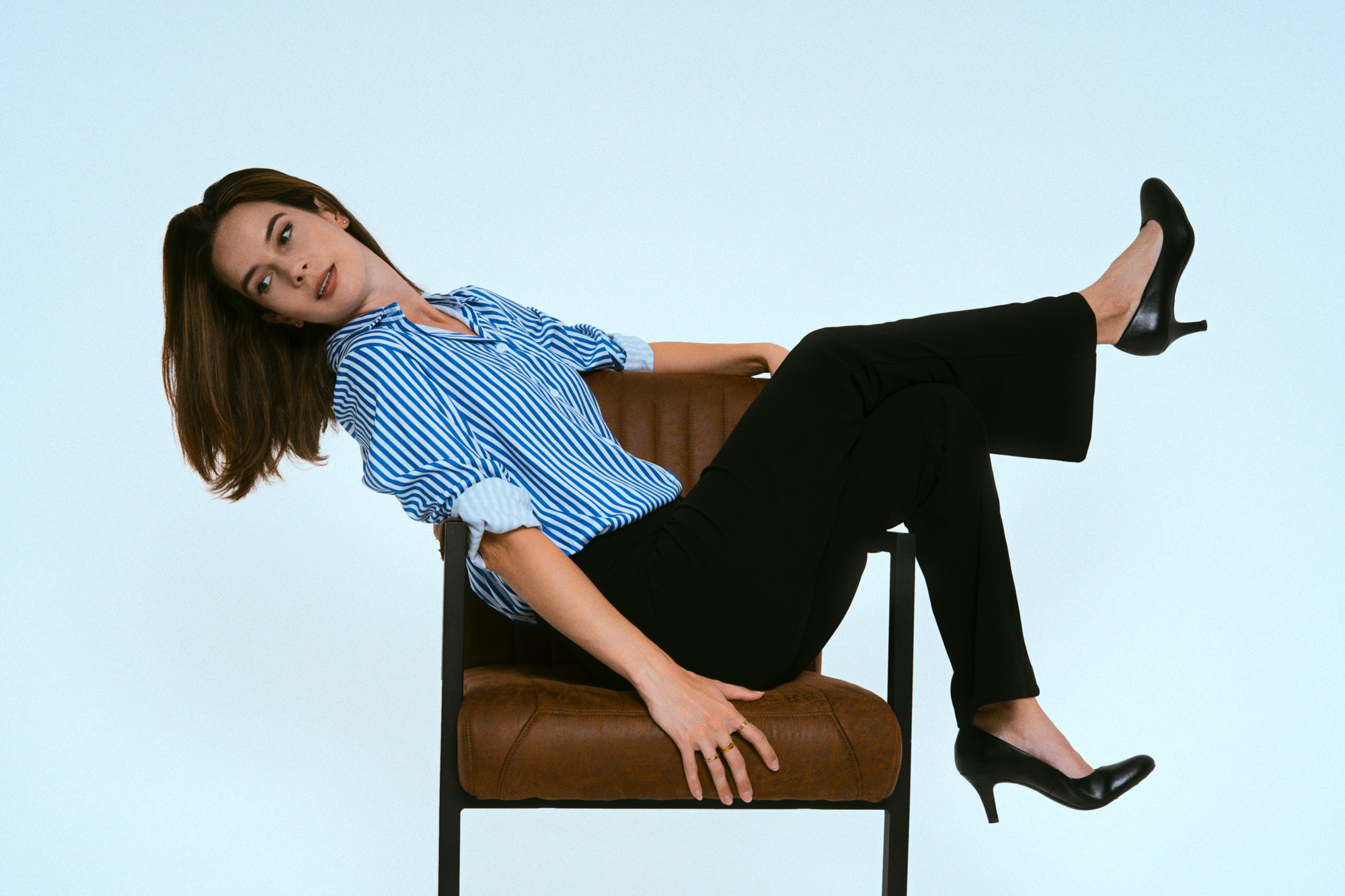
Actress Julie came into the studio with a request we don't get every day: not a standard set of headshots, but a session built around the character she's playing in her upcoming film. The brief wasn't "make me look good" — it was "make me look like her."
Shooting a Character, Not a Headshot
That shift changes how a session is planned. Instead of a standard portrait flow, we talked through who this character is before a single frame was shot — how she carries herself, what she'd do with her hands, whether she takes up space in a room or edges around it. Wardrobe, light, and posing all got built around that answer.
The set stayed simple on purpose — a bright white studio background and a couple of chairs — so nothing competed with the performance. The chairs ended up doing more work than expected, giving Julie something to move around, lean on, and play off of between poses, which kept the energy loose and unscripted rather than locked into stiff portrait stances.
"It's less about getting a flattering shot and more about getting the right one — a frame that reads as her character the moment you see it, not just as a portrait of an actress."
We shot in bursts, letting Julie move through a sequence of beats — a laugh, a turn, a stride across frame — rather than holding static poses. That's where the character actually showed up: in the in-between moments, not the posed ones.
Why This Works for Actors
This kind of shoot is becoming more common with actors who want material built around a specific role rather than generic portfolio portraits — images that work for a reel, a press kit, or simply to hand a director a visual sense of the character before the camera ever rolls on set.
.jpg)
.jpg)
.jpg)
.jpg)
.jpg)
.jpg)