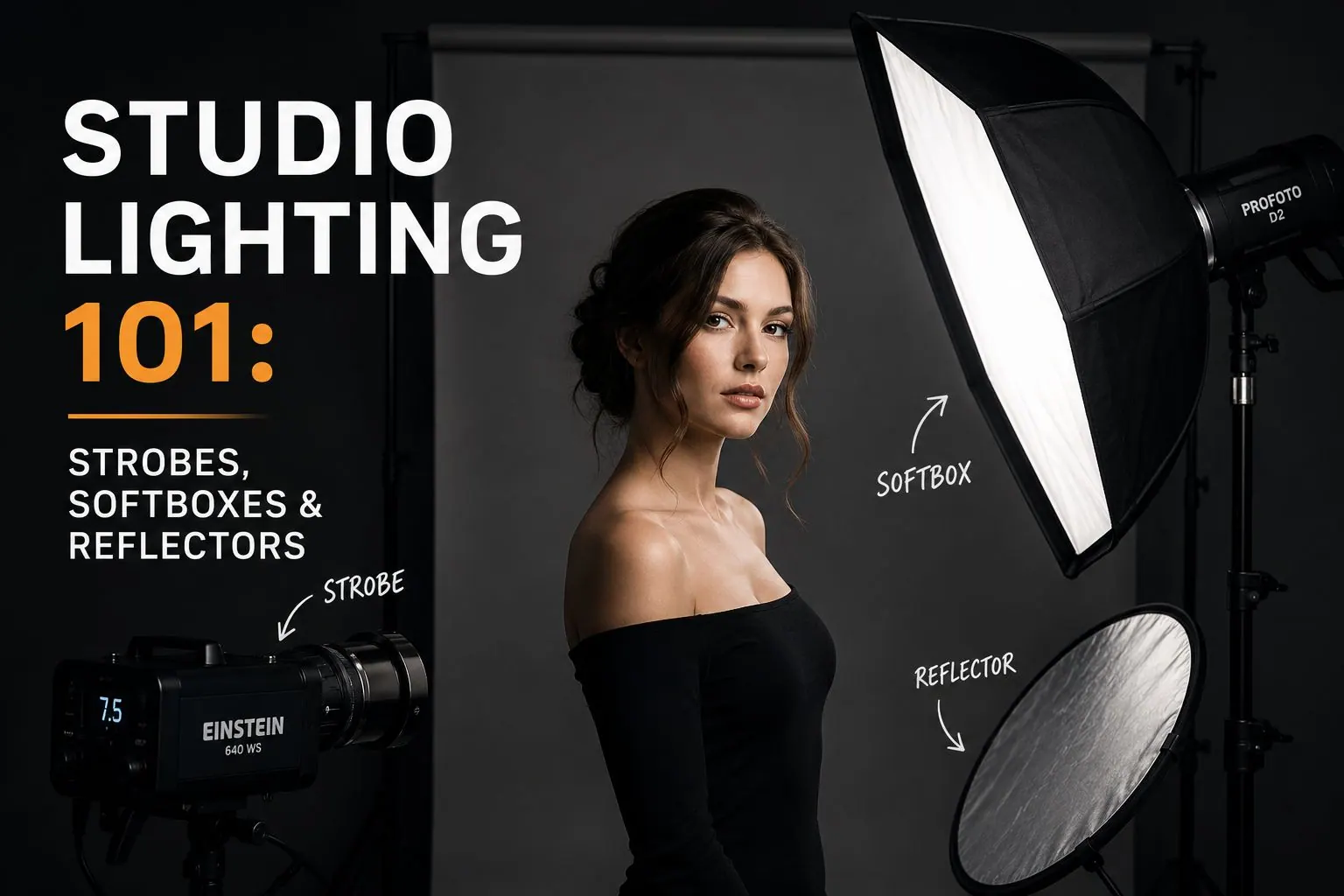
Ask ten photographers what the most important piece of gear in a studio is, and nine of them will say lighting. The camera is just a tool. Light is the actual material you're working with, and how you shape it determines everything about the final image.
Over the years I've worked with a lot of different setups in my Downtown LA studio. Some gear stayed. Some didn't survive the first year. Here's what I've learned: broken down by category, without the usual marketing noise.
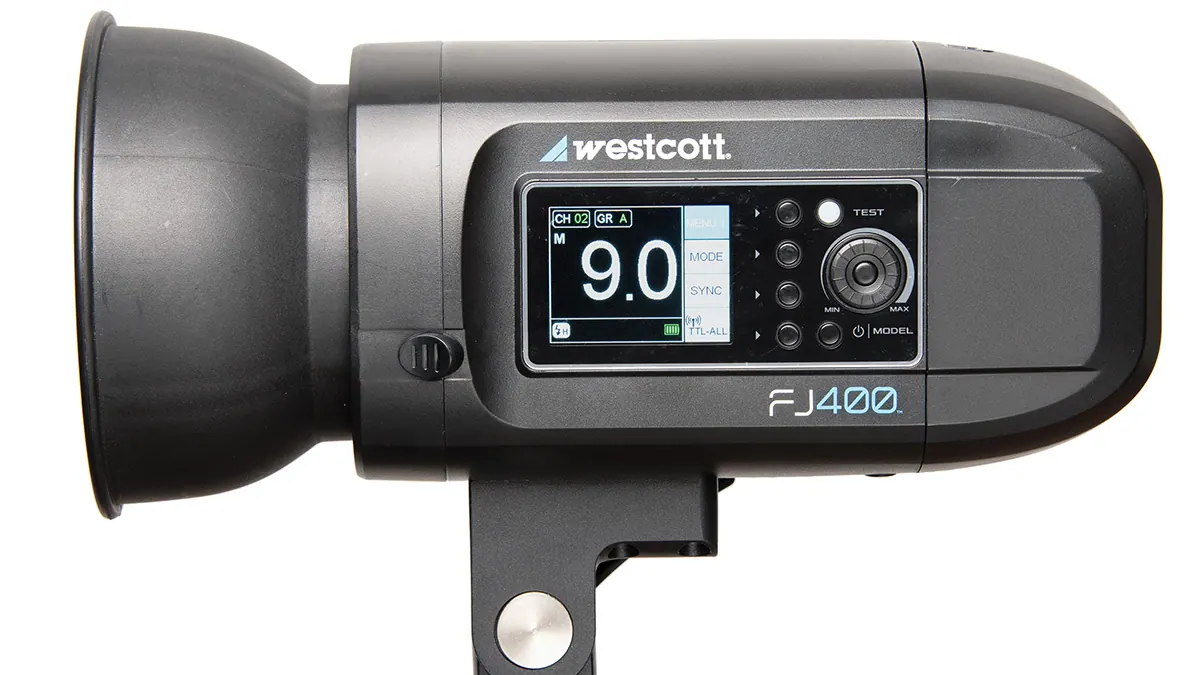
A strobe, also called a monolight or studio flash, is the primary light source in most professional setups. Unlike a speedlight you'd mount on a hot shoe, a studio strobe is a self-contained unit with its own power source, modeling light, and a standard Bowens or similar mount for modifiers.
In our Downtown LA studio we run Westcott FJ400 strobes, and after putting them through a few hundred sessions, they've earned their place. 400 watt-seconds of output, HSS support, consistent color temperature across the power range, and a Bowens mount that works with virtually every modifier on the market. For a working studio environment, that last point matters more than most photographers realize. You don't want to be locked into a proprietary ecosystem when a client shows up with a specific look in mind.
The FJ400 also recycles fast, around 0.8 seconds at full power, which keeps the pace of a session moving. When you're shooting portraits or headshots and need to capture a natural expression, waiting on your strobe kills the energy in the room.
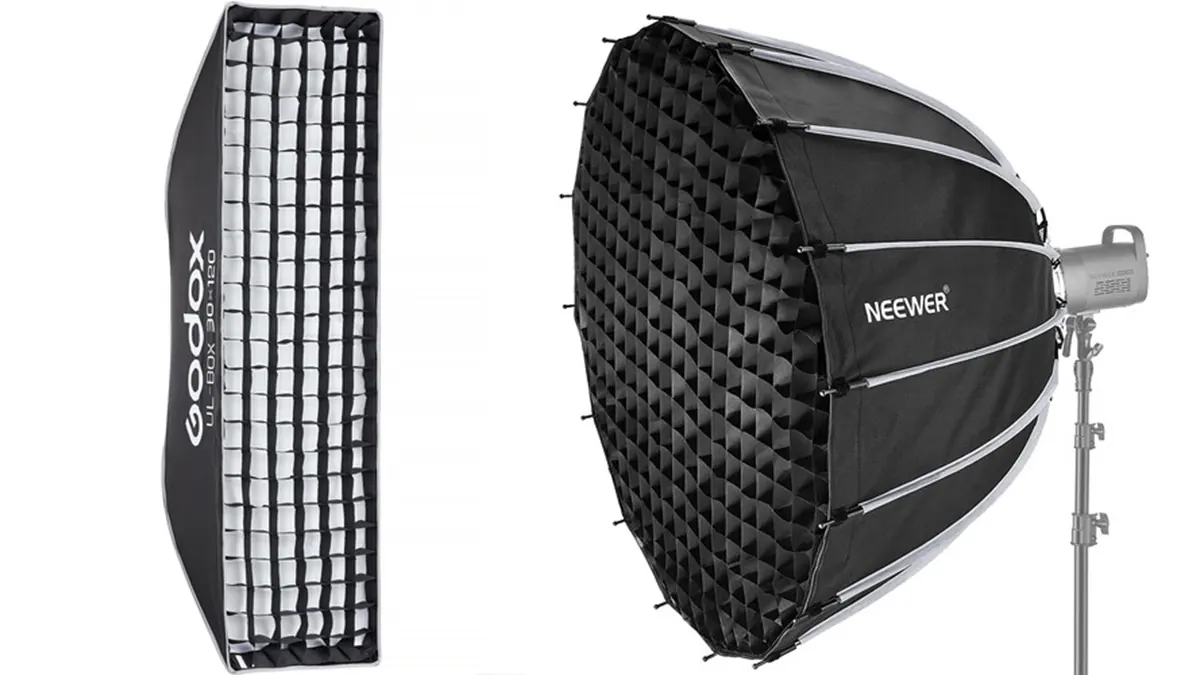
A softbox diffuses the strobe through translucent fabric, turning a small harsh point of light into a large, soft source. The rule is simple: the bigger the softbox relative to your subject, the softer the light. What that looks like in practice depends on which format you reach for.
Here's what we have in the studio and what each one actually does:
- Two small softboxes, 30–40 inchthe most versatile tools in the room. Good for a tight portrait key light, hair light, or kicker. The smaller size gives you more directional control: light falls off faster, shadows are more defined. These are the ones that stay on stands the most.
- Strip softboxtall and narrow. Almost always used as a rim or edge light positioned behind the subject. Creates that clean line of separation between shoulder and background without spilling everywhere. Especially useful for dark-on-dark looks or dramatic fashion setups.
- Two 90-inch octoboxesthis is where the studio changes character. At 90 inches, an octobox stops behaving like a modifier and starts behaving like a window. The light wraps around your subject, fills in from multiple angles, and produces almost no hard shadows on its own. Ideal for full-body work, families, couples, or any situation where you want soft, enveloping light without a complex multi-light setup.
One detail worth knowing: when we run both 90-inch octas together, one on each side, the result is a near-shadowless environment. Some photographers love it for e-commerce or clean beauty work. Others find it too flat and prefer one octa with a reflector for fill. Both are valid. The studio gives you both options.
Standard reflectors, the bare metal dish that ships with most strobes, are what most photographers put away and forget about. That's a mistake. A reflector with a grid or bare gives you the most controlled, directional light in the studio. Tight beam, fast falloff, punchy shadows. It's the opposite of the octobox, and sometimes exactly what a portrait needs.
We keep standard reflectors on hand for whenever the look calls for more contrast: a dramatic headshot, a fashion editorial with deep shadows, or a background light where you want a clean hot spot rather than even spread.
The large shoot-through umbrella in our studio is the most underestimated piece of gear we have. It's not glamorous. It doesn't photograph well in a gear shot. But it produces a beautiful, soft, wrapping light that's hard to replicate any other way, especially when you need to light a wide area fast.
A big umbrella at close range on a family group or a couple creates that natural, airy look that reads less like "studio" and more like open shade. It's also the fastest setup in the room: one strobe, one umbrella, done. No fussing with softbox rods in front of a client.
The beauty dish sits between a softbox and a bare strobe in terms of character. Light bounces off the inner reflector before passing through the front diffusion panel, creating a quality that's slightly harder than a softbox: more microcontrast, better skin texture, more defined catchlights.
Add a honeycomb grid and the beam tightens considerably: all the qualities of the beauty dish, contained to exactly where you aim it. It's the go-to for headshots where you want the face to pop with detail, and for beauty work where skin texture is the point rather than something to hide.
There's a reason so many photographers come back to the same core setup for portraits and headshots. It's not because they lack imagination. It's because it works.
- Key lightone FJ400 with a small softbox or beauty dish at 45 degrees to the subject. This does the main work: shapes the face, sets the mood.
- Filla second strobe at lower power on the opposite side, or simply the large umbrella close in. Takes the edge off deep shadows without flattening the image.
- Hair or rim lightthe strip softbox behind and above the subject. Creates that clean line of separation from the background.
- Background lighta strobe with a standard reflector aimed at the backdrop. Brighter for clean white, dimmer for grey gradients, gelled for color.
You don't need all four from day one. A single softbox and a reflector will take you further than you'd expect. Add lights as you understand what each one is actually doing, not because a YouTube video told you to.
Our Downtown LA studio is 1,800 square feet with 14-foot ceilings and north-facing natural light. The full lighting kit available for every session includes:
- Westcott FJ400 strobes400Ws, HSS, Bowens mount
- Two 90-inch octoboxesfor soft, wrapping light on full-body and group shots
- Two small softboxes, 30–40 inchfor directional portrait and accent lighting
- Strip softboxrim and edge lighting
- Large shoot-through umbrellafast, wide, flattering
- Beauty dish with honeycomb gridfor headshots and beauty work
- Standard reflectorscontrolled, punchy output for dramatic looks
You don't need to know how to set any of this up. That's what I'm here for. Every session starts with a conversation about the look you're after, and we build from there.